65 litre backpack weight
Share this awesome article with your friends, you know u wanna... Choosing the right backpack is absolutely essential to any successful traveling experience, but with the market being flooded with so many sub-par, generic rucksacks it difficult to know what to choose! How many litres should your backpack be? Is the brand important? How much should I pay? I’m going to run through the criteria you should consider when purchasing your backpack SIZE: Backpack size is measured in litres, so how many litres should your backpack be? You want to choose something between 55litres to 70 litres. In terms of kilos, a full 55 litre backpack will weigh around 14kgs approximately whereas a full 70 litres backpack will weigh around 20kg. Naturally, as a backpacker you want to travel as light as possible so I would recommend taking a 55litre, although on my first few trips I struggled to choose what to take and went with a 65. Now I carry an (only partially) filled 55 litre and it’s perfect.

Just remember though if you take a larger bag, you will fill it (probably with unnecessary extras!) so be vigilant, buy a smaller bag, and reap the benefits for the duration of your trip. No-one wants to be lugging around 20kg I promise you that! SHAPE: If I had one piece of advice for any first-time backpacker it would be this – get a side access backpack, NOT a top-loading one. This is one feature you should not compromise on, there’s few things more infuriating than having to unpack your entire belongings to get access to the one shirt you carry for a special occasion! With a side zip everything is on hand and easily accessed, much much more desirable! Also, search for as many interior compartments as possible. Certainly a minimum of a mesh divider in the main body to keep either your dirty clothes or electronics separate is a must. Hidden pockets for US dollars/spare credit cards etc is a huge plus too. BRAND: To be honest unless you plan to redesign your life and be on the road constantly over the next few years then brand isn’t important.

Any run of the mill backpack should last the course of one 3month-1year trip, however if you plan to be on the road indefinitely it would be worth your while to go for a high-end brand (Berghaus, , Osprey etc) as they are much more robust (and expensive!) COST: Backpacks range from $50-$250 so the choice is ultimately dependent on your budget. I’d avoid the cheap cheap, cheap bags unless you’re just jetting off for a week or two. Normally you get what you pay for and you don’t want the bottom of your bag falling out on the way up Machu Pichu now do you?! If you spend more than $150 you’re getting top of the range, from there on up you’re pretty much guaranteed top quality bags. Aim to pay over $85 but no need to pay more than $150 really. That’s the quick rundown then guys, I went through the purchasing process myself last week and it can be a real nightmare – have an idea of what you want before you step into the store and you’ll be all set. Best Backpacking Packs of 2017
For minimalist overnights to extended treks, our top picks excel in carrying comfort, organization, and weightRucksacks are available in many sizes, each with a wide range of features designed to suit different purposes.
ration packs for sale south africaIn our How to Choose a Rucksack guide we will take you through the various sizes, common features and considerations you will need to make.
miharayasuhiro backpackThis guides aims to provide you with all the information you need to make an informed decision about which backpack is best for your needs.
backpack balkans One of the main factors to consider when choosing a backpack or rucksack is what size rucksack/how big does it need to be.
sully backpack
This will depend on what you plan to use if for (eg. everyday bag or a week-long trip) and how much you need to take (the bare essentials or kit for an overnight stay). Is there a difference between a backpack and rucksack?
cs go backpack calculatorIn the UK a backpack (or daypack) will invariably be smaller and a rucksack will be larger.
kawasaki backpack blowerBoth terms however are often used interchangeably. People often ask how big is a 65 litre rucksack? or how much can I fit in a 30 litre backpack? Backpacks are measured by the total capacity of all of the pockets in litres, essentially you will be able to fit in 30 litres of gear in a 30 litre backpack. This however might not mean a great deal when you are trying to decide if a rucksack is big or small enough for your needs. It is often easier to look at the actual measurements (perhaps even compare to a bag you already own) to get an idea of how big the backpack is.

In this guide we will take you through the various backpack sizes and what activities and situations they are most suited to. It is important that your backpack fits you correctly so you can carry it in comfort. This will depend on your build and back length (not your overall height). Most backpacks will come with adjustable back straps (bigger backpacks are also likely to have adjustable chest straps) to ensure your backpack fits securely and comfortably. If the backpack sits too low, even when adjusted, it is too big for you and vice versa. Check out our How to Fit a Rucksack guide for more information. Around 70% of the weight of the sack will sit on your hips. An adjustable hip belt is a common feature on medium and large backpacks as it helps to secure the bag around the hip area for added support and load transfer. Compression straps (adjustable straps which can be found on the top, side or down the front of backpacks) can be pulled tight to reduce the volume of the pack and to minimise movement of items within.

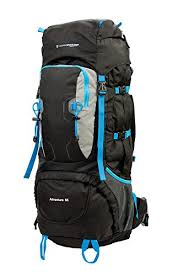
Back & Chest Straps Adjustable straps are essential for ensuring a good fit. Chest straps ensure the pack is secured and help distribute some of the weight of the pack. For larger rucksacks particularly you can adjust the height of the straps depending on the length of your back. Often straps will be padded for added comfort- especially important for heavy packs. Multiple internal and externals pockets/compartments are useful for organising and separating contents. Internal security pockets are essential for stashing valuables whilst side mesh pockets are ideal for holding water bottles. Many of the Mountain Warehouse backpacks also have an MP3 player/Ipod pocket inside with an earphone outlet so you can listen to music easily on the move. To help divide contents further some larger packs may have a completely separate bottom compartment with zipped access that is closed inside with a drawstring. Larger rucksacks might also include hip belt and lid pockets for easy access to important or frequently used items.
If you plan to wear your pack in the dark, on a night run or hike for example, reflective piping will help you be seen. A rain cover (tucked away in a handy pocket) is useful for covering your rucksack to stop the contents getting wet in the rain. If your rucksack doesn’t come with a rain cover it is possible to buy rain covers separately. External Clips & Hooks External clips and hooks are useful for attaching gear you may need often to your backpack- especially useful for hikers and travellers. These include daisy chains (a strip of webbing loops), elasticated cords and walking pole hoops. Larger rucksacks may have internal frames to distribute the weight of the bag and support it on your hips as well helping your keep an upright walking posture. Mini and Small Backpacks – 6, 8 and 10 litre Small backpacks are very versatile and are as suited to shopping trips as they are for day trips or walks. An 8 or 10 litre pack will easily accommodate a packed lunch, drink and some packable waterproofs.
The compact size also means they are great for kids. An 8 or 10 litre backpack makes the ideal school bag whilst our 6 litre backpacks (see our Mini Trek backpack) are the perfect size for younger children. Mini backpacks are also popular with runners, cyclists and skiers as they are just the right size for stashing snacks and extra layers. (Please note it is not recommended that first time skiers/snowboarders wear a backpack as it can affect balance). Best For – Days out, Kids and Sports Not Suitable For – Carrying large heavy loads or for extended trips Daypacks – 10 – 30 Litres A daypack (or daysack) can be any size between 10 and 30 litres and as the name suggests they are primarily designed for one day trips. They are well suited to walkers and hikers who will be spending the day outdoors. Some daypacks will be hydration compatible so a hydration system can also be carried in the pack. A 30 litre backpack may also be suitable for weekend trips as it will easily accommodate spare clothing, water, food and other essentials.
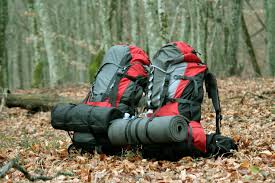
If however you have to take sleeping bags and other camping gear it is likely you will find the backpack to be too small. Smaller daypacks are also suitable school bags and are ideal for commuters. Best For -Day walks, hikes and expeditions. Not Suitable For – Weekend trips that require you to carry sleeping bags and other camping gear. Medium Backpacks – 35- 50 Litres Medium sized rucksacks (often between 35 and 50 litres) are designed for multi-day use and for carrying heavier loads than daypacks. Most of these backpacks will have all the features of a daypack but with additional padding, pockets and fixing points for all the extra equipment you’ll need for a longer trip. A medium sized rucksack would be ideal for those thinking of an overnight trip. If you pack light a 40 or 50 litre pack would also be sufficient to hold your clothing, tent and sleeping bag for a 3 day hike. Best For – Overnight trips, 3 day hikes if packing light. Large Rucksacks – 65L +